Sunday, 14 October 2012

Theory Lecture Notes & Response

The title of the lecture: Jasper Johns and Robert Rauschenberg

     We began by looking at the work of the Abstract Expressionists and how their ethos corresponded and differed to that of the two titles artists. Specifically looking at the works between 1950 - 1953. Craig pointed out that the artists within the AE movement were authorial as artists, they were at the centre of their woks creation; The pieces an expression of themselves. The evidence for this claim was presented in the form of documentary images. How the photos of the artist working within their studios suggest to promote the creator over the creation. Another testament to this appears in David Hopkins 'After Modern Art' (art and social function, page 15) when he writes "Abstract Expressionist individualism was promoted by the American establishment to counter the collectivist ideals of Socialist Realism.). The Abstract Expressionists interest with the Surrealisms considerations for Freud and the unconscious also promote an importance of self.               

'Erased De Kooning Drawing' by Robert Rauschenberg, 1953

     To paraphrase Craig: The process of the work was a reduction to structure. It could be seen as symbolic, for an erasing of his peers or the 'fathers' of the art before him; An "iconoclasm'. This piece was a powerful statement in the direction of the New York avant garde.

Photo of Black Mountain Collage
  
     The Avant garde being spoke of had a home at the Black Mountain Collage. Rauschenberg attended here alongside De Kooning and many others. Here at Black Mountain:

     "Composer John Cage pioneered the idea of aleatoric music; choreographer Merce Cunningham formed an experimental dance company which changed the course of modern dance. Robert Rauschenberg blurred the boundary between painting and sculpture, calling his art “installations” for the first time; Jasper Johns started a new age with his pop imagery entering the world of fine art; and painter Cy Twombly worked with John Cage to visualize Cage’s musical concept of silence with his graffiti-like scribbles." written by penccil

     As a collective these artists assumed a critical reflection on the nature of contemporary art, questioning and experimenting with it. Duchamp can be seen as a large influence within their ethos. A certain distance and detachment is evident in their process. Duchamp promoted just as Dada, the Surrealists, and John Cage's Fluxist's embraced, that chance is essential in art; that you mustn't attempt to exert a control over that, more so to realise it as integral. Framing back to the initial address of Craig's lecture, in this very sense, the work being created by Rauschenberg and his immediate peers was anti-authorial; It did not suppose, but reflect, did not impose, but create space. 

     This Anti-authorial approach is evident in this statement. Talking about his 'White Paintings' Rauschenberg stated "It is completely irrelevant that I am making them. Today is their creator." (I suppose I'm curious as to how we adopt this attitude in other areas of our life, and not just our view on art.)


     And again the creation of space could not exemplified better then in John Cage's 4:33:


     The piece is obviously about silence, but through that uses the medium of ambient sound. It allows space for the sound that already exists  In this sense the work work is inhabited by the audience and becomes them. The objective is, maybe, to reflect the subjective response. John Cage in conversation about the piece said he wanted "to move from structure to process, from music as an object having parts, to music without beginning, middle or end. Music as weather."

     This piece titled 'Minutiae' by Rauschenberg (1954) was present in the lecture as example of the artists suggestion that the medium should not define the creator, that you can be more then a painter, or a sculpture. It reminds me of a realisation i'd had a while ago, that the truth can be spoken in several languages, apparently quite obvious on one hand, and yet for me, a profound realisation about the nature of language and communication on the other.


This understanding can be related to 'The finger and the moon' proverb:

Hotei's Finger Pointing at the MoonThe nun Wu Jincang asked the Sixth Patriach Huineng, "I have studied the Mahaparinirvana sutra for many years, yet there are many areas i do not quite understand. Please enlighten me."
The patriach responded, "I am illiterate. Please read out the characters to me and perhaps I will be able to explain the meaning."
Said the nun, "You cannot even recognize the characters. How are you able then to understand the meaning?"
"Truth has nothing to do with words. Truth can be likened to the bright moon in the sky. Words, in this case, can be likened to a finger. The finger can point to the moon’s location. However, the finger is not the moon. To look at the moon, it is necessary to gaze beyond the finger, right?"

This understanding is discussed in more detail here
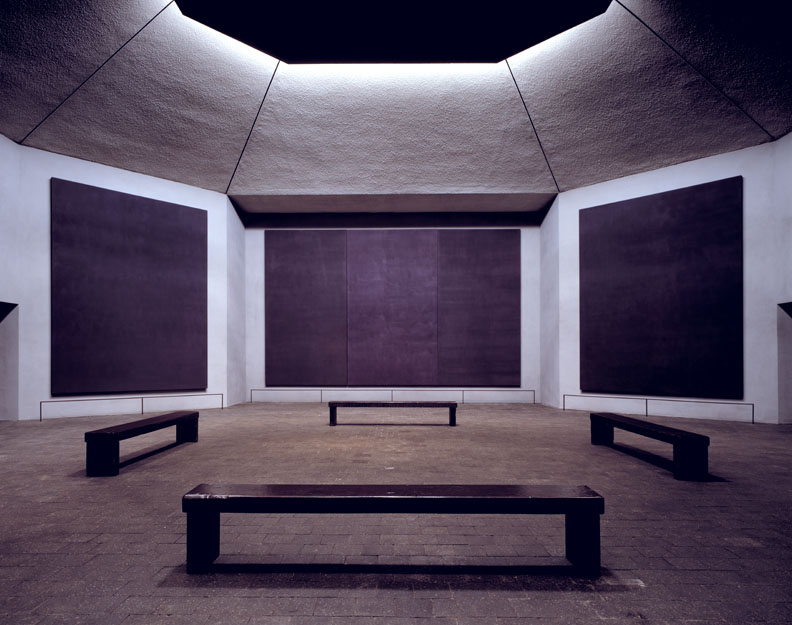
Collection of Mark Rothko's 'Black paintings' at The Rothko Chapel

     Perhaps overtly opposite to the 'White paintings' of Rauschenberg, however pushing the politics of the new York art scene to the side, formally I am claiming that Rothko's 'Black paintings' have more in common with John Cage's 4:33 then Rauschenberg's paintings. Where the white paintings propose a purity of form in space, there is an inherant awareness that the object exists through ethereality of its subject; adversely Rothko's 'Black paintings' create a void in space, Like  reflective black hole, pulling you in as subject. Continuing along the space themed metaphors, in 4:33 there is this same sense of vacuum which the work creates; like a sensory deprivation tank the stimulus is denied, leaving our-self, our natural state of being, brought into conciousness; it can be witnessed within the video of 4:33's performance above, just as I witnessed it in the lecture hall when Craig orchestrated (in a sense) a re-enactment, us as the audience. These works are the 'awkward silence', only named so because we can no longer distract ourselves and become aware of the present moment, the infinite now.

Thanks to Craig Staff for an inspiring lecture


A Chat With Mike Evans


So today, whilst attempting to recover some filming off a very temperamental camera, I crossed paths with one of my tutors, Mike. He asked about some of the video work I've recently been doing. After showing him the videos in the newly refitted projection room (which is awesome) we began talking about the work and ideas surrounding it.

Bruce Nauman:


The way in which the paint is applied to the body, resonates with the nature of my video's process, as the pixels wash over the moving figure, like liquid paint. The nature of the portrait also may have some relevance to the work, the nature of looking at the'self' and the image of our 'selves'.


False Memory Syndrome:

Another thing that Mike suggested i look into was 'False Memory Syndrome'. A psychoanalytic term for the study of memories that are either distortions of original memories or completely fabricated. This suggestion came when explaining my concern with the fallible nature of visual perception and increasingly so visual reproduction in the mind. This theory, of which there is evidence to be found, also enhances my curiousity with our relationship to the past; the association of our selves with something that is no more, in one sense or another. I'll be bold and suggest: Memories we have to remember aren't memories at all; obscured by the ambiguity of perception through time. The things that placed us in the present, those are our real memories; living through us in the now.

What are false memories?  Because of the re constructive nature of memory, some memories may be distorted through influences such as the incorporation of new information.  There are also believed-in imaginings that are not based in historical reality; these have been called false memoriespseudo-memories and memory illusions.  They can result from the influence of external factors, such as the opinion of an authority figure or information repeated in the culture. An individual with an internal desire to please, to get better or to conform can easily be affected by such influences. False Memory Syndrome Foundation

Here the writer Mikkel Borch-Jacobsen discusses the function of false memory within the context of Freud's career. The reason I have highlighted the conclusion here is to draw attention to the relative relationship between what is perceived and what is believed, we often accept that what we see effects our view of the world, though rarely do with accept that equally, our 'view' or 'idea' of the world can directly effect what we see. 

It is thus one thing to say, as IsraĆ«ls does, that these ‘memories’, these ‘scenes’ (and later, these ‘fantasies’) were not spontaneous, because they were the product of Freud’s theories and hermeneutic hubris. It is quite another to consider them as mere fictions, mere non-realities. The fact is that these theoretical fictions did become real in Dr Freud’s office, because of his patients’ willingness to accept his ‘solutions’. To speak of lies in regard to this fabrication of ‘psychical reality’ is too shortsighted: in the domain of psychotherapy, just as in that of human affairs in general, such a co-construction of reality is inevitable and normal. There, one never finds facts, only artefacts. In the end, if psychoanalysis must be criticised, it is not because it fabricates the evidence it adduces, nor because it creates the reality it purports to describe. It is because it refuses to recognise this and attempts to cover up the artifice. How a fabrication differes from a lie by Mikkel Borch-Jacobsen.


Monday, 1 October 2012

Media Proposal (Video, Paint)

     Beginning where I left off; the last academic years work culminated in the creation of a painted diptych. A conversation about the malleable ‘grey area’ that exists between perception and reality, between different cultural attitudes, and more specifically commenting on the nature of individuality; questioning our ability to connect and establish a dialect. The intention for my coming work is to continue an investigation into the indefinite, using the nature of memory and our experience of ‘self’ to explore the entropy of impermanence.

    The writer Eckhart Tolle discusses our relationship to the ‘self’ or ‘ego’. We propel ours ‘selves’ back and forth, through past and future, inadvertently grasping at a control; assumption and identification, the poisonous nutrition of false validation. Ultimately he proposes that we accept our place in the eternal presence of the now. Following this logic I have began exploring how we relate to our memories, understanding that we largely derive and identify ourselves with them.

    I will be using the temporality of film to capture an experience, using a specifically developed video process I will be repeating the captured video. The process losses some of the original clip data per repetition; as it is constantly overwritten the image is becomes distorted to the viewer. This represents my curiosity about memory and acts as a metaphor for our inability to live in the past as it forever recesses from the present into obscurity.  

    The condensational process seen in the work of Idris Khan and Jason Salavon, is of strong relevant for my intentions to experiment, with condensing the frame by frame imagery of video into a single still, a single moment. In this vein, I am also keen to explore how the process can fit within the historical context of modernist painting; the conversation between the essential illusion of realism and the curiosity of abstraction. Just as Pollock transformed the easel bound canvas into a floor, a stage. I intend to reconsider the very human experience of time and memory.  

Sunday, 30 September 2012

I guess you never know

I guess you never know where your work is going to take you. Right now I'm considering filming a sex tape. How I got here . . .


Creating my grey paintings, I became fascinated by the concept, that the universe only exists because we are here to witness it, and that this symbiosis is akin to a 'grey area' where perception and reality meld into something malleable  In retrospect I realised the work was also about a meeting of different peoples perspectives. It became about the experience of empathy.

Through hindsight, now I recognise that I am promoting the appreciation of a unity that we all share. People Often talk about losing themselves in the moment. What this means exactly is something I want to explore.

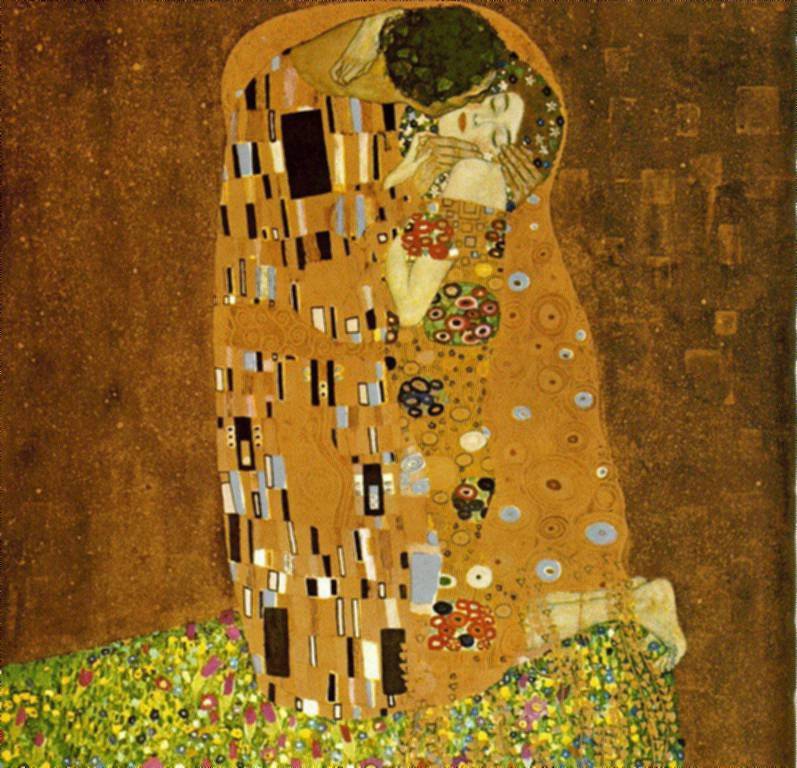
Gustav Klimt - The Kiss
Konstantin Brancusi - The Kiss

These two works are examples of physical embrace between two people and the intimacy of this connection. The figures appear as a single compositional element, unified. In exploring options for articulating someone losing themselves, these works suggest that n losing ourselves we can find our 'oneness', like the single piece of rock carved into Brancusi's sculpture.
Sex provides a vessel in which to present this concept; addressing the physical, tangible connection as well as introducing a temporality to the design. The moment. Climax is seen as an ephemeral ecstasy. Though this euphoria transcends sensation; the self dissolves through conciousness , and the eternal present is realised.  

I'd been considering simply filming two people having sex and slowing it into something akin to Bill Viola's video work (seen below).


Now I feel that a more congruent exploration of my interests with the concept would be to explore the notion of time in video and how I can condense this document of the sexual experience into a moment. Consider Idris's Khans work only with video.

Idris Khan

Also, Jason Salavon


Saturday, 29 September 2012

Inspiration: Some things I like right now


Made in


Grayson Perry


Gordon Cheung


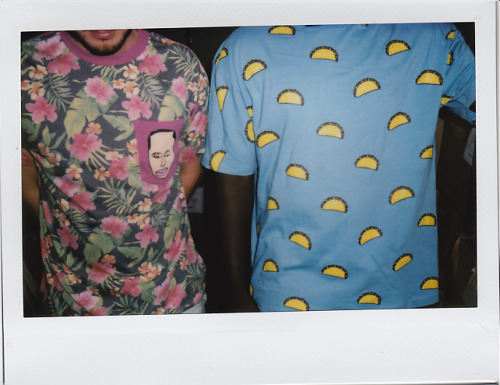
OFWGKTA (Odd Future Wolf Gang Kill Them All)


The Story of Odd Future

Duration: 
1 hour
First broadcast:
  
Sunday 09 September 2012

Odd Future Wolf Gang Kill Them All is an LA collective of young producers, rappers, photographers, writers, directors, t-shirt makers, skateboarders, bloggers and all-in-all cult creators. This group consists of highly driven musical artists, creating some of the most unhinged, funny and profound hip hop in the market today.
These young minds are brash, bizarre and amazing. The collective acts with all the love and support of a family - but with a load of sweets, vomit, dinosaurs and alligator wrestling thrown in for good measure. The music is a mixture of 'anarchy rap,' the warped humour of 'salad fingers' and what sounds like the over-usage of a thesaurus. Each member has a personal style, creating grey areas in the categorising of musical genres - and when they work together they blur the lines further, which has created a huge fan base and worldwide acclaim.
Since their origins in 2008 the collective have produced over 20 albums, bagged themselves a TV show, won VMA's, created a clothing label and made 'Musty Butthole' trend on Twitter!
Odd Future have been criticised for their use of homophobic and misogynistic lyrics, but they claim not to mean any of it and view the words as a test for the uninitiated and lazy critics.
Regardless of the criticism, group leader Tyler the Creator has not only become famous, but made all his best pals famous too. They have single-handedly caused so much hype and aggro, that they are impossible to ignore. Their tongue in cheek references to drugs and murder mingle childishly with catfish, rainbows, Earls big lips, swag, unicorns and centaurs. They cause offence, but say it's only to make fools of the easily offended.
Expect a bombardment from the screwy world of Odd Future, on tour and at home in LA, with screaming fans, intimate honest interviews and Taco's guide to surviving a zombie attack. In the words of Jasper Dolphin...SHAZAM!  Article taken from here


CARNIVAL IN 4 DAYS. PRIZES? HMMMM


Shannon FinleyShannon Finley


Year 2 - dum dum duuuuuuum

Hello,
        Year two of my Fine Art Degree begins NOW!

Grey:

Austin Lavelle

Austin Lavelle


      So earlier in the year I spent some time looking at the 'Grey Area' between Light And Dark, the Minimal and the Graphic; the work opened a conversation for the area between different cultural attitudes, and I began using this as a metaphor, for the distance that can appear between two peoples perceptions of life when they try to start a dialect. The indeterminate horizons that sit above the images ambiguous landscapes aim to emphasise this duality.
       The ambigious nature of the image and its graphic layer of social commentary is my attempt to bring into question: How much of what is apparent to us, is shared with others? . . . And how much of what's true is lost in translation?


Memory

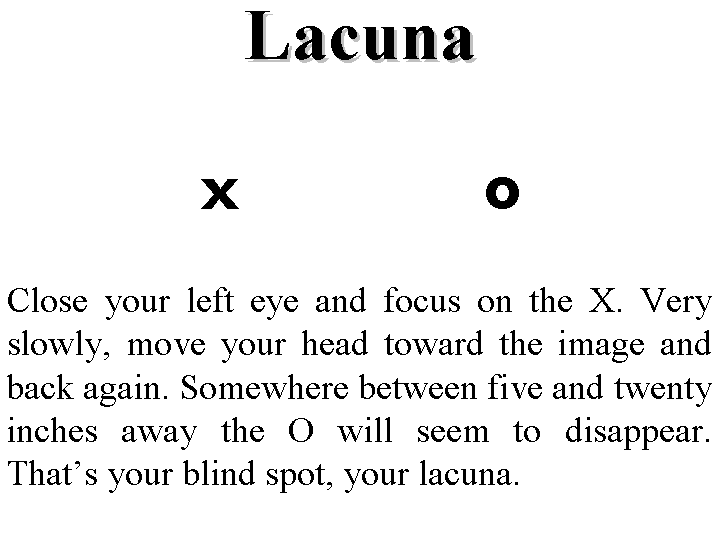
     Following from the previous questions with the grey work I began to question the reliability of not only what we perceive, but also what we visually see. I came across this little test here (below):

Eyeball Blind Spot Illusion
Retinal scan

     Though this is evdience of our inability to 100% trust what it is we see, there is a larger question at hand about the nature of how our visual sensory perception is then trasnslated into our mental perception of the thing. The disparity between the physical and the meta-physical. This thread discusses the topic in more detail.
     So if we cant fully trust what it is that we are seeing, then im now curious about how it is that we can trust our memories. How much of what we remember is truly remembered, considering that some of it wasn't ever really 'seen' in the first place.

Heres an example of an old video tape. Imagining that as our memories get replayed over and over and time passes, just like the tape, some information is lost:


     I want to start considering how I can begin to respond to this developing idea. So I begin to consider ways in which i can translate the concept of memory and its ambiguity into work.
 
     I saw this video In the TED talks (follow the link if interested, they have an amazing collection of presentations). The speaker talks about mapping a working model of the brain and explains some of the structural elements of how we create our thoughts and images in a vast web of neuro-electrical networking. Fascinated, I am considering how I can some how incorporate this weblike structure and grid into my imagery.


Say how the pathways reminded me of minesweeper, how you would click one square and all of a sudden you could unlock an entire area, like a puzzle our memories can be triggered by specific stimulus. and yet also like minesweeper, these areas leave the screen with a barron area or nothing, like gaps in our memory.


Here are images of family memories, I have distorted the images taken from videos, using a process popularly known as 'Datamoshing'.


Now combining the minesweeper gridded system representing memory and the images of family memories (below):


Video Tape:
     I took a diferent aprroach to the concept here, using the physical material of the video tape to create a (not really sure what to call it); literally its a reflective sculpture I suppose. The tape was wrapped around a frame over and over until a solid mesh was made. The reflective nature of the material turns the frame into a mirror. Where the tape and been crossed and overlapped, the reflected image is distorted. This has a lot of relevance to my questions about the nature of video as well as a very relevant relationship to the way a old video tape losses its video quality (as seen in the video earlier). Now however instead of the work being pre-determined, the piece establishes an interactivity with the audience, in real time. There is a photo of the piece and me in its reflection below.


I am now currently in the process of figuring a way to cause the frame to vibrate. This will add another level of distortion to the reflection, in real time. Similar to Jeppe Hein's mirror here:


Here is a video of the frame being vibrated manually as a test of the effect:


Memory & Self

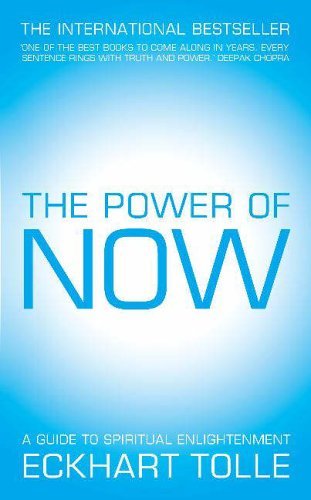
Over the summer I read a book called 'The Power Of Now' By Eckhart Tolle, The book brings into question our ideas of self, the image of our ego and how we associate our 'self' with particualr things which we use to define us as individuals. Ultimatly it argues the detrimental nature of the ego and how our alienation, wether it be concious or not is delision, taking us away from the essence of being and the interconnectivity that we all share. Read the book if anything I just blurted is of interest to you.


Now in relation to the development of my work; A large art of where we gain our identity is from our memories, as if the things in the past define us in the present. Theres a scene in the remake of the film 'Total Recall' where the protagonist is asked about the nature of self and individuality.

    If you had forgotten everything you owned, everyone you knew, your name, the date, the time, would you still be you? The answer is ofcourse, yes? right?

    When people say 'I lost my self in the moment', what does this really mean . . . You become so present, that your ego is lost, this sense of self dissipates, you transcend your 'self'? Now time is in question; the video of the vibrating canvas shares a temporal element, as we experience the distortion second by second, frame by frame.

I used the process I used to make the memory images above, to repeat a single video clip over and over, As the video replays, the process losses some of the original clip data each time, as it is constantly overwritten the image is distorted. This represents my curiousity about memory and acts as a metaphor for our inability to live in the past as it forever recesses from the present into obscurity.


I'll be back with more, this is the beginning. . .